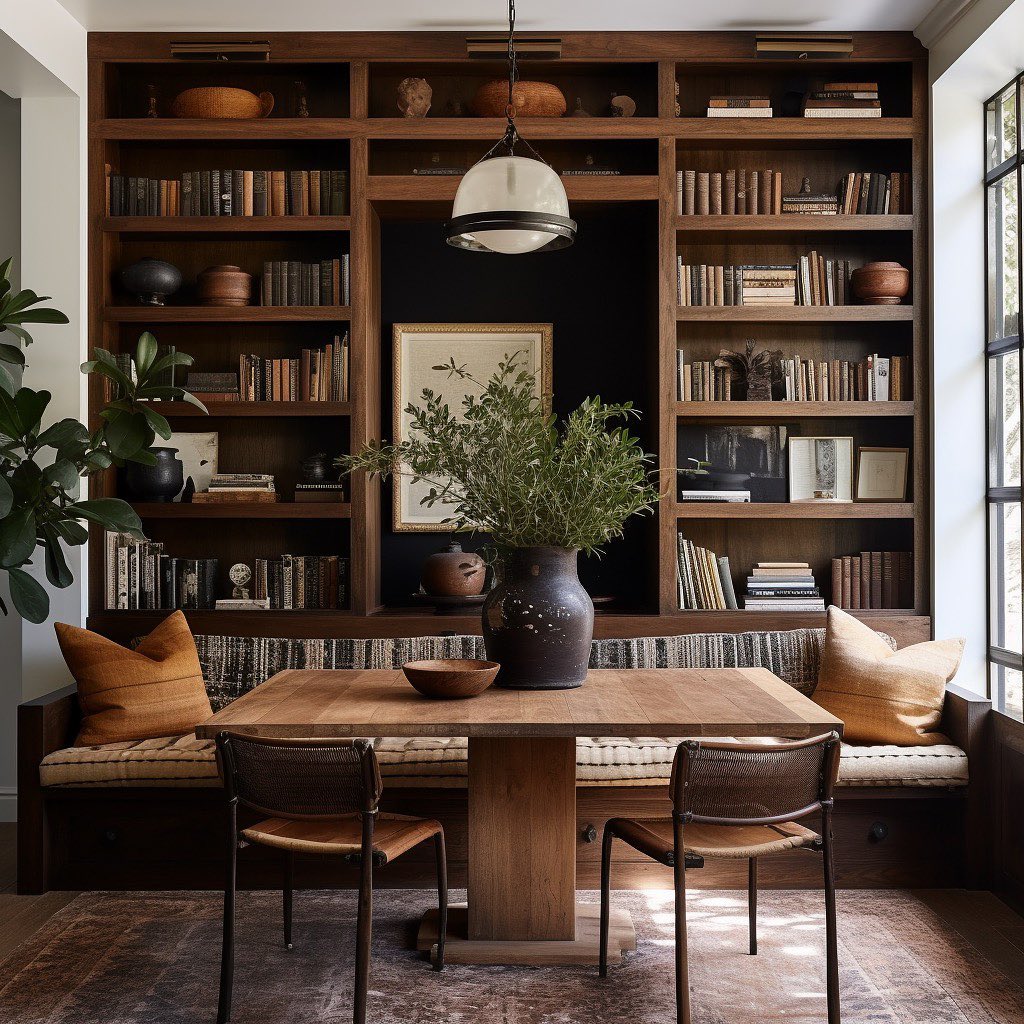
The Return of Dark Wood Interiors
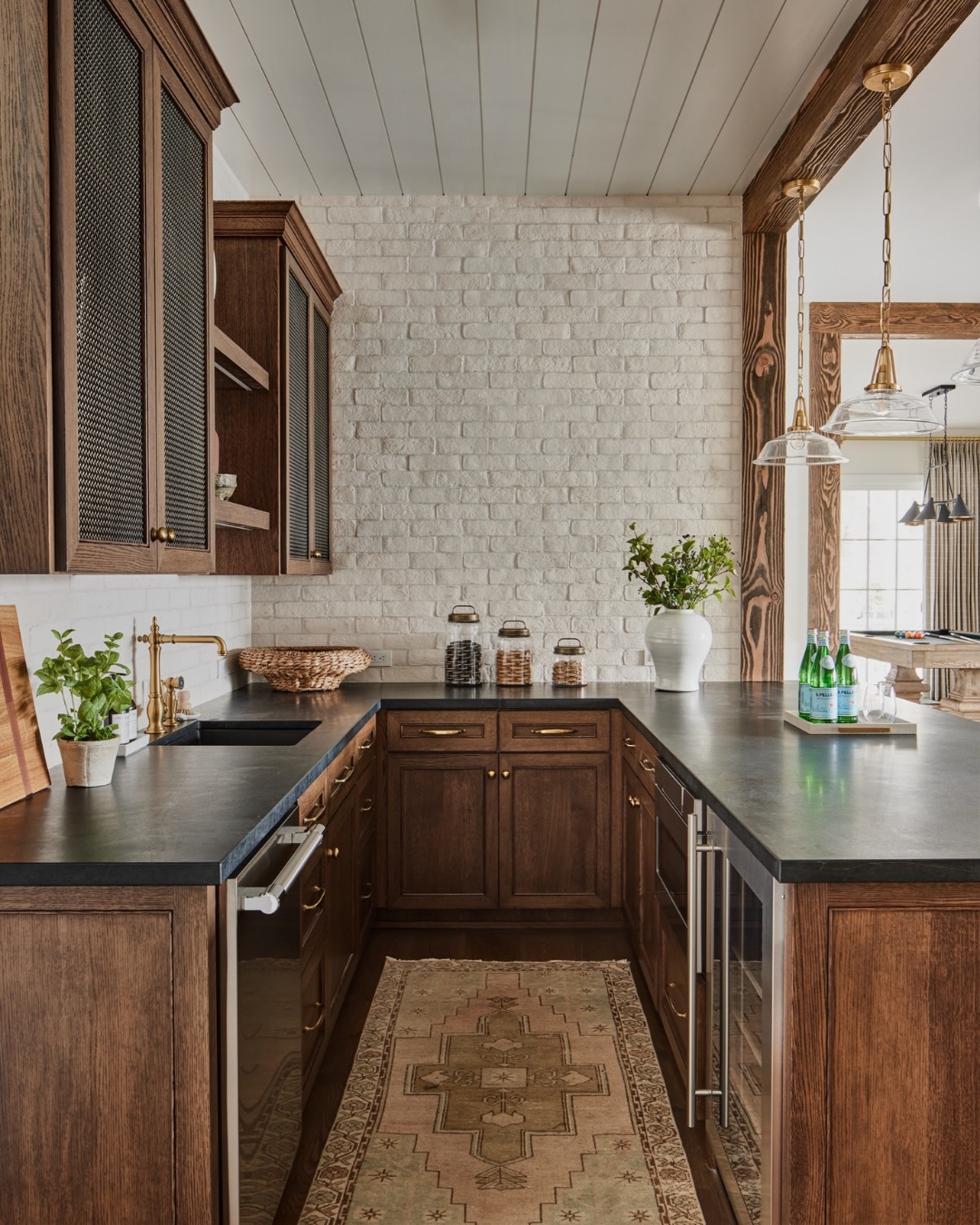
Photo Lexi Westergard
For years, interiors leaned heavily toward pale oak and all-white kitchens. But designers are now bringing back deep walnut, espresso oak, and rich stained woods to add contrast and sophistication.
In kitchens especially, dark wood cabinetry creates a beautiful balance when paired with lighter elements like marble countertops, creamy plaster walls, or white tile backsplashes. The combination feels timeless but still fresh.
Another detail that stands out is how dark wood interacts with metal finishes. Brass faucets, warm bronze lighting, and antique hardware all pop beautifully against deeper wood tones.
The result is a kitchen that feels collected, warm, and quietly luxurious.
Architectural Wood That Frames the Space
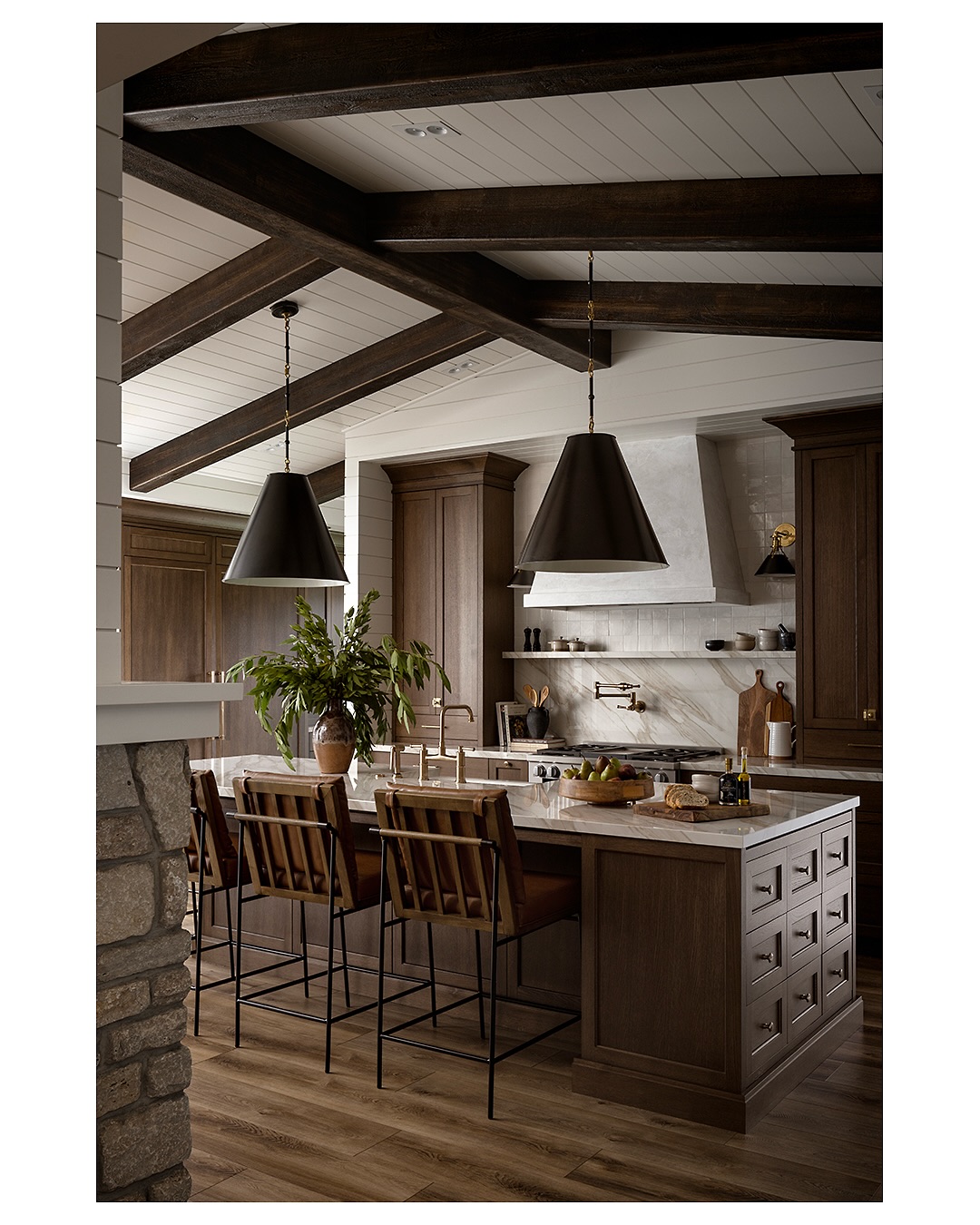
One of the most striking uses of dark wood is in architectural elements like ceiling beams, wall paneling, and structural framing.
Instead of blending into the background, these features become visual anchors. Dark beams draw the eye upward and give large open spaces a sense of structure. They also create contrast against light ceilings and walls, which keeps the room feeling bright and airy.
In living spaces, dark wood floors or wall accents work beautifully alongside neutral upholstery, soft textiles, and plenty of natural light. This mix keeps the room feeling relaxed rather than heavy.
It’s a perfect example of how dark wood can feel both modern and timeless at the same time.
Classic Details That Feel Fresh Again
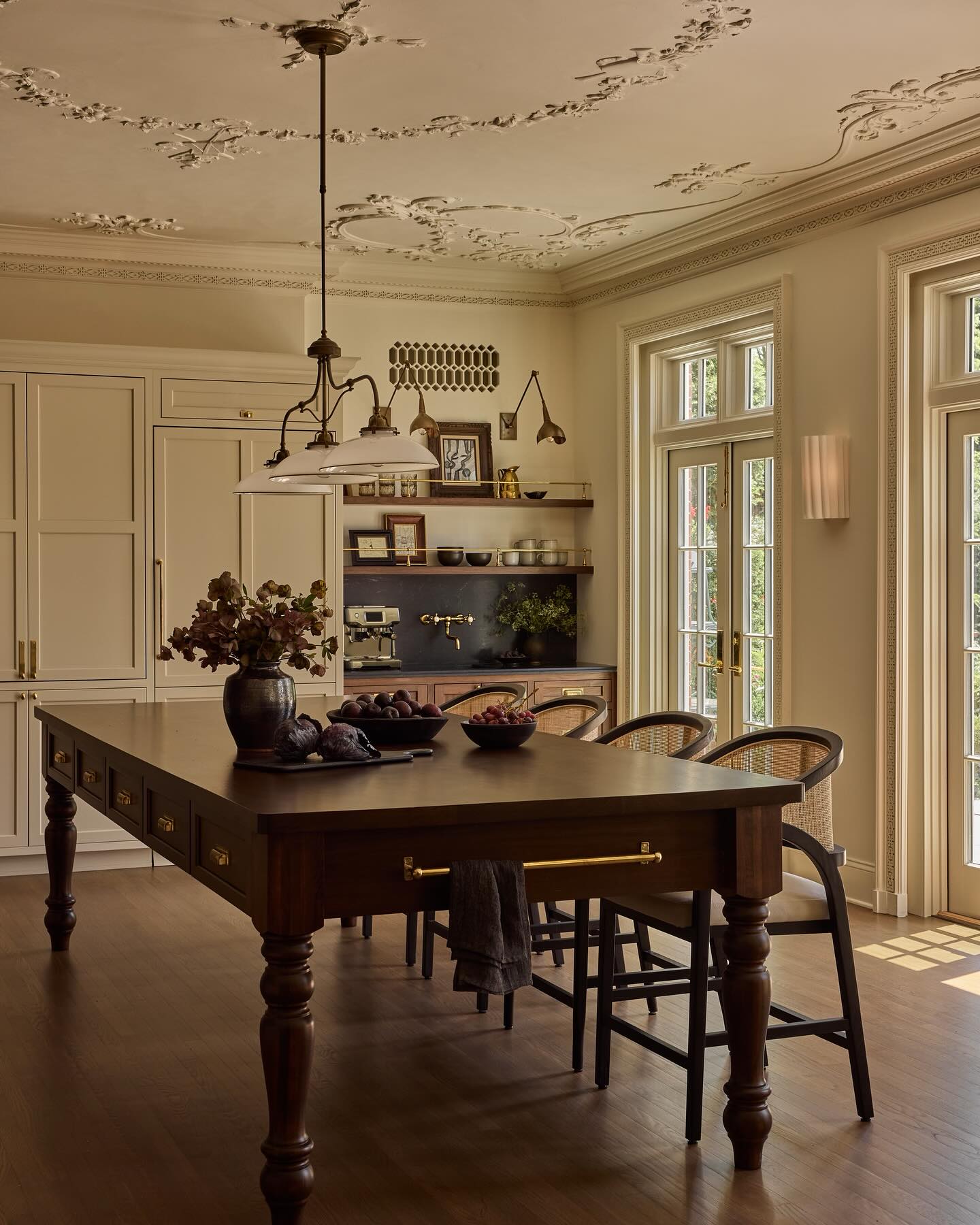
Photo Haldon House
Dark wood also shines when paired with classic craftsmanship. Think carved island legs, traditional millwork, ornate plaster ceilings, and antique-style lighting.
What keeps these spaces from feeling dated is the restraint in the palette. Creamy whites, warm taupes, and soft neutrals allow the wood to be the star while keeping the overall space calm and elevated.
These kitchens and dining spaces feel like they’ve evolved over time rather than being designed all at once. That sense of history is part of what makes dark wood interiors so appealing.
They feel collected, layered, and deeply personal.
Why Dark Wood Works So Well Today
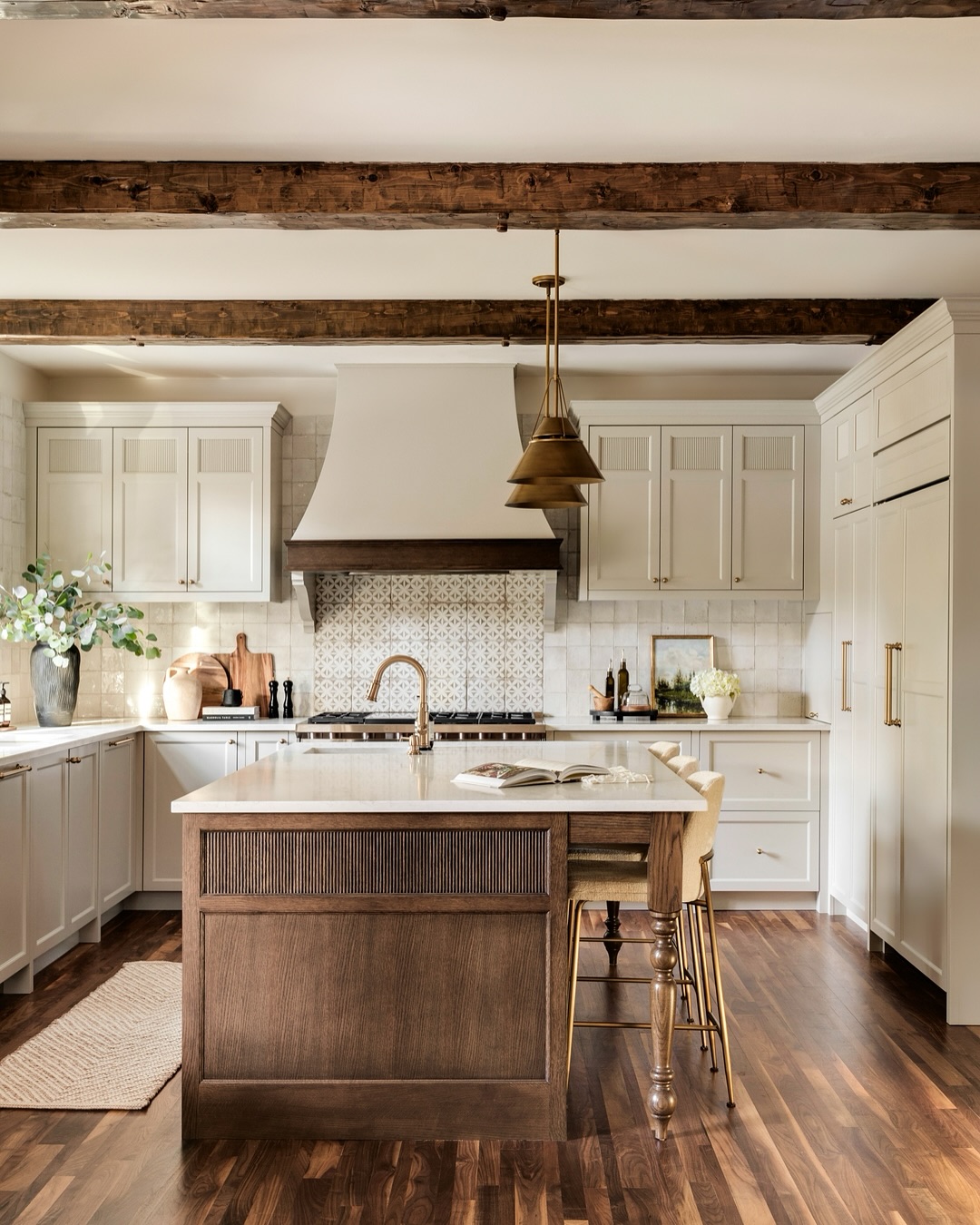
Photo Alykhan Velji Designs
There are a few reasons dark wood is resonating again in modern interiors:
It adds instant warmth to minimalist spaces
It grounds bright rooms filled with natural light
It highlights craftsmanship in cabinetry and millwork
It pairs beautifully with stone, brass, and plaster finishes
Designers are also mixing wood tones more freely now. Dark cabinetry can live alongside lighter oak floors or painted walls, creating depth instead of a perfectly matched palette.
The key is balance. A little contrast goes a long way.
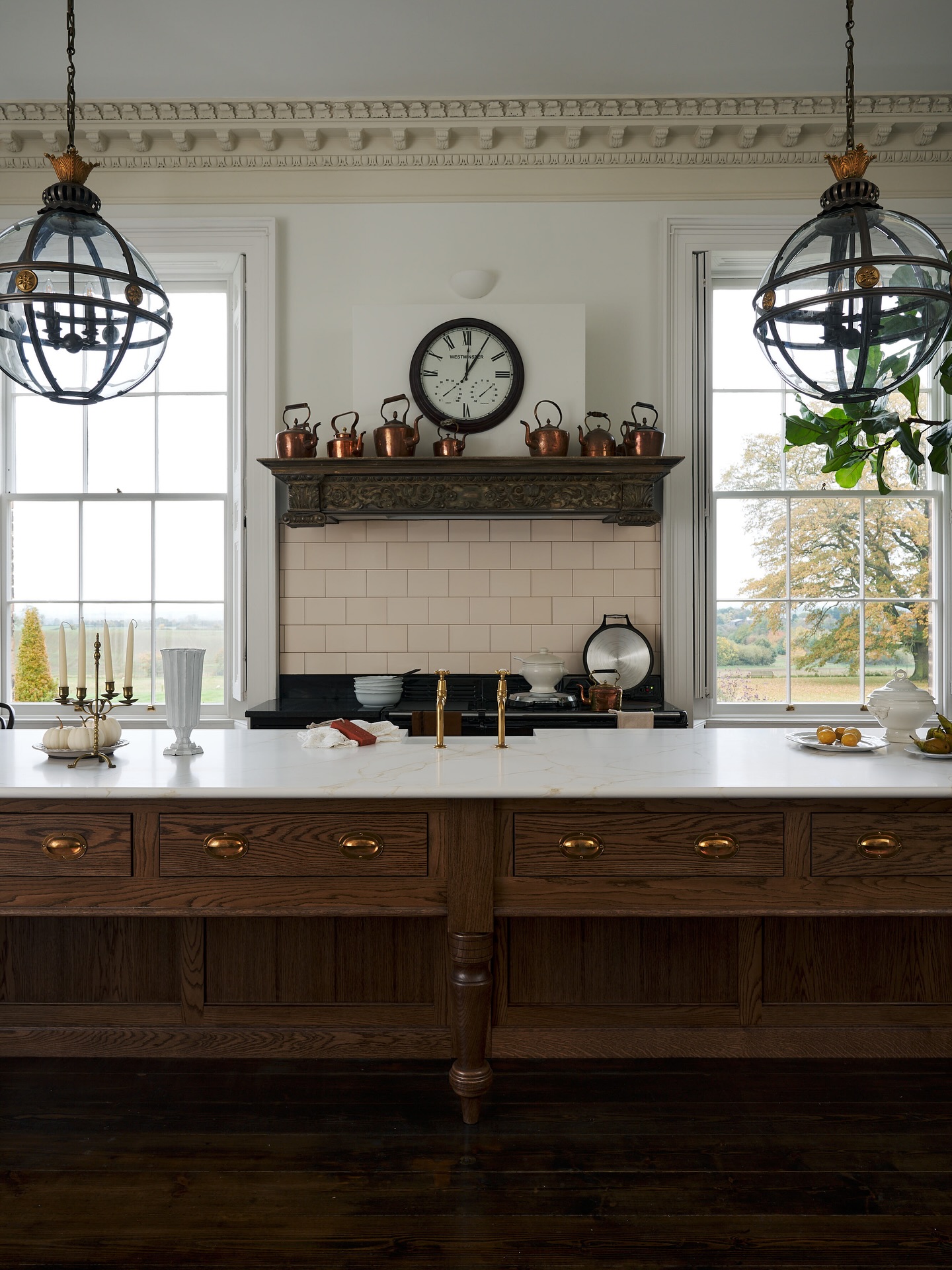
Photo deVOL Kitchens
Curated Dark Wood Finds to Warm Up Your Space
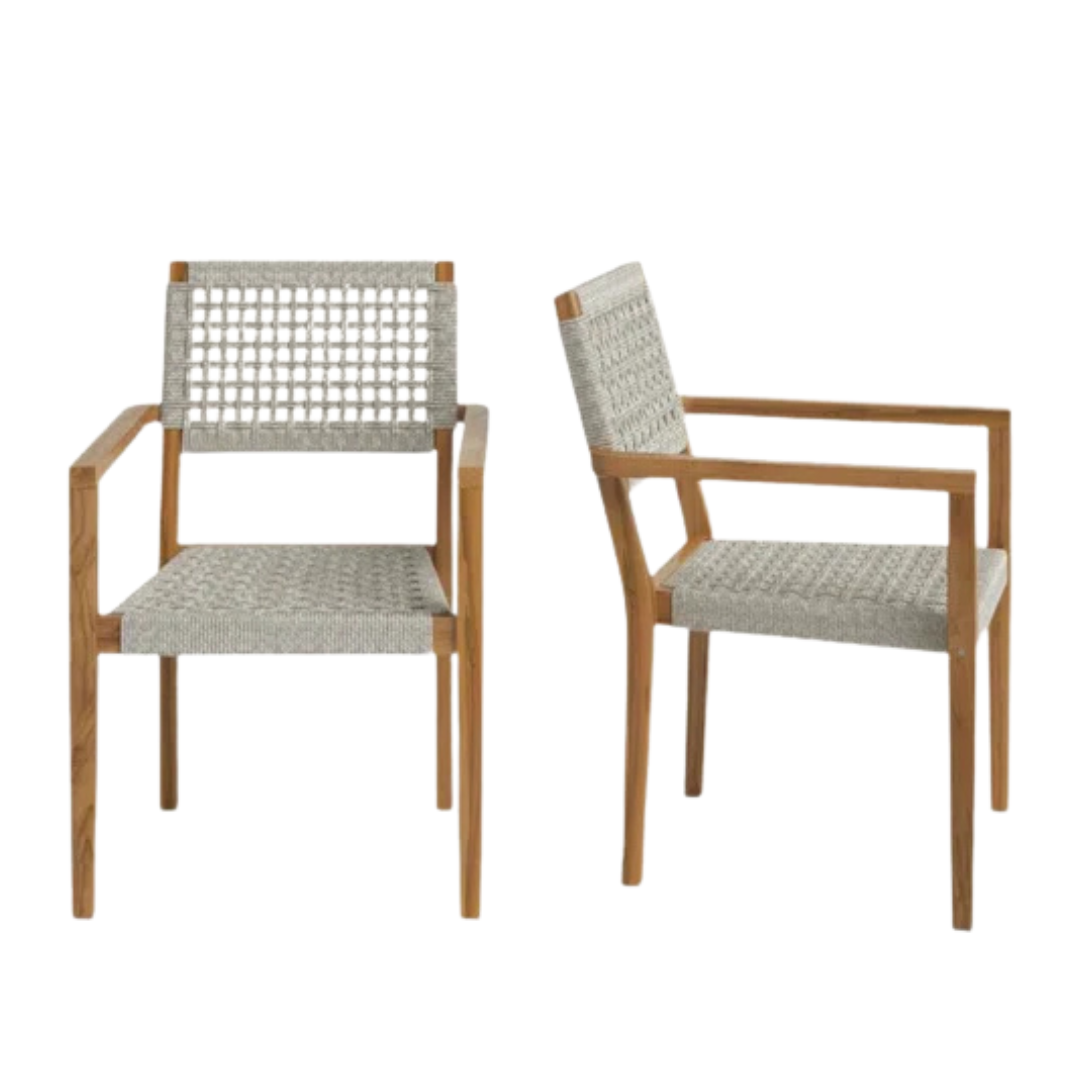
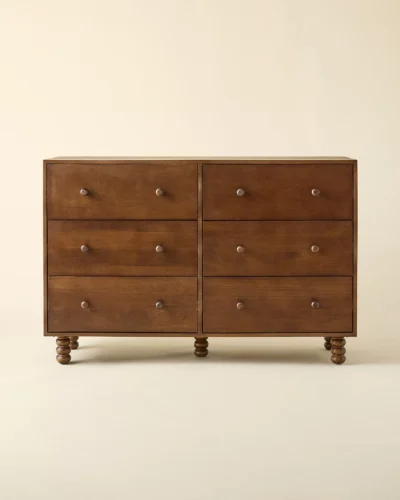
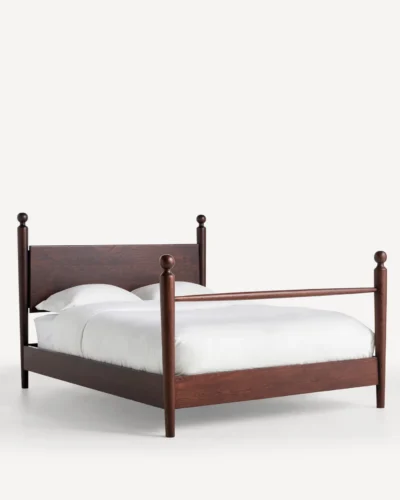
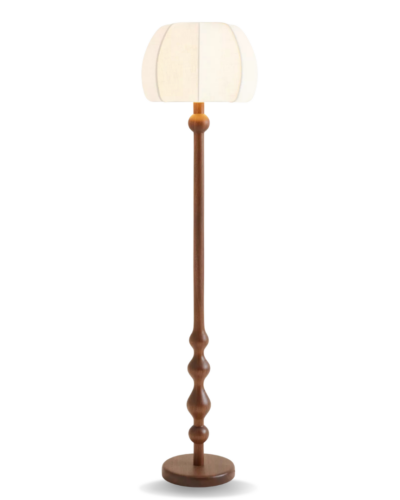
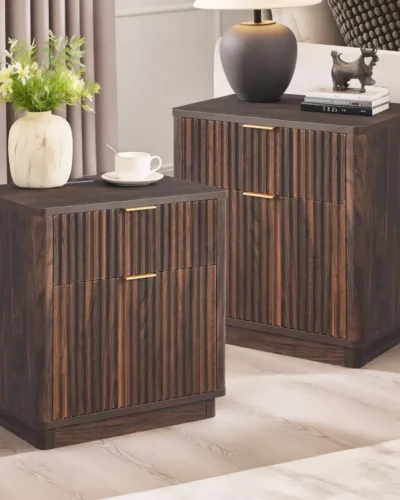
If you’re inspired to experiment with dark wood, you don’t need a full renovation to bring the look home. Start small and intentional. A walnut side table in the living room. A dark wood dining chair that adds contrast to a light table. Or a sculptural wood lamp that brings warmth to a neutral corner.
We curated some pieces below that capture the richness and warmth of dark wood, an easy way to introduce this timeless material into your home without changing everything at once.
The Takeaway
Dark wood interiors feel rich, grounded, and timeless in a way that lighter palettes sometimes can’t replicate. Whether it’s deep walnut cabinetry, architectural beams, or a sculptural island, these darker tones add warmth and character that instantly elevate a space.
When paired with natural light, soft neutrals, and layered textures, dark wood becomes less about heaviness and more about depth, craftsmanship, and quiet sophistication.
xoxo, Coco