Black Interiors Are Having a Moment
For years, the safe interior-design formula was all about keeping walls light and bright. White kitchens, cream walls, beige sofas, and soft neutrals dominated the conversation.
But lately, I have been noticing a shift toward something much moodier.
Black walls. Black millwork. Black ceilings. Black cabinetry. Black fireplaces.
And honestly? I love it.
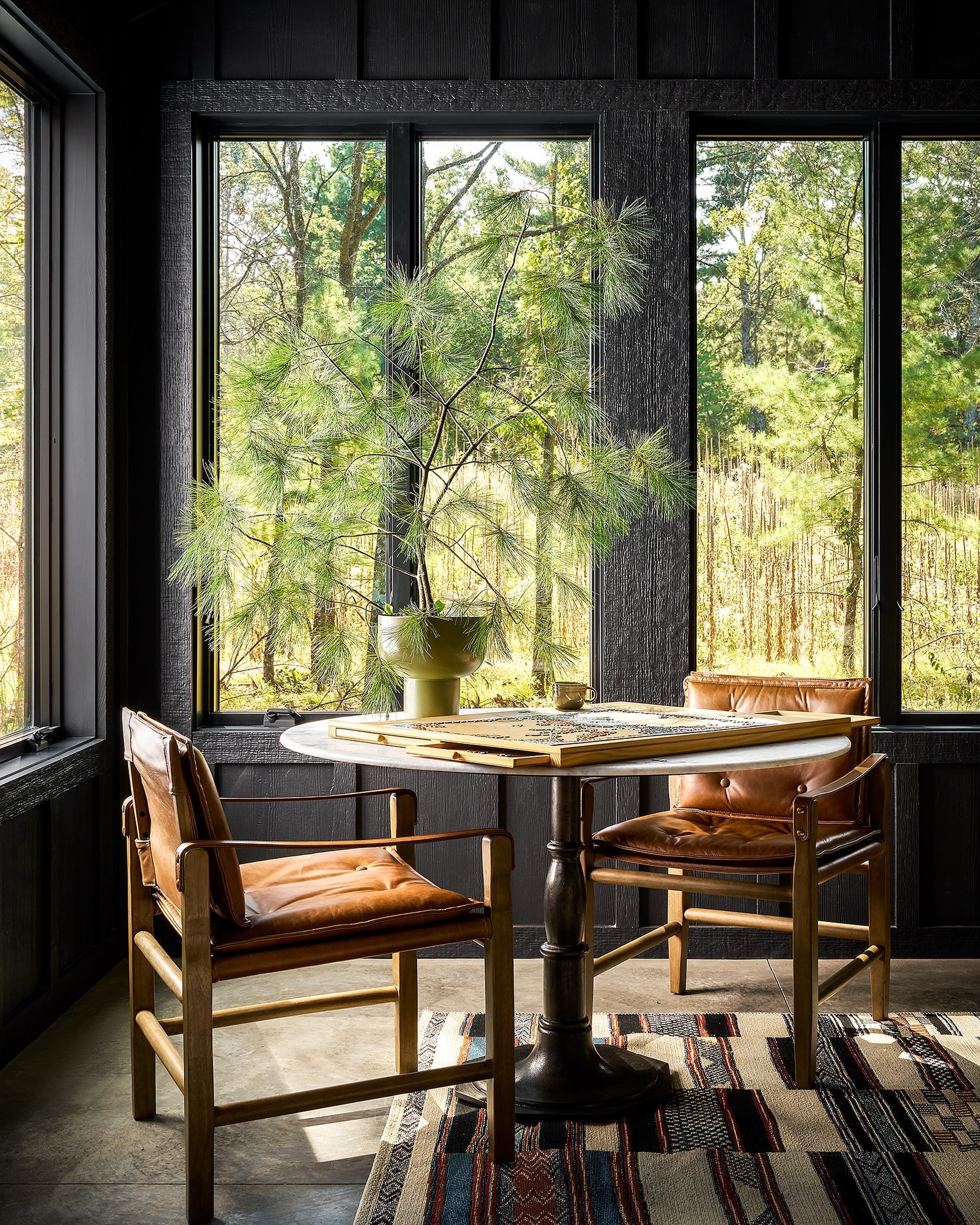
The key is that these rooms aren’t simply black. They are filled with contrast and texture. The darkness creates a backdrop that allows everything else in the room to stand out.
Think warm wood against black walls. A cream sofa against a dark fireplace. Green branches against black-painted windows. Brass hardware catching the light.
That contrast is what makes these rooms work.</p>
1. Start Small With Black Cabinetry
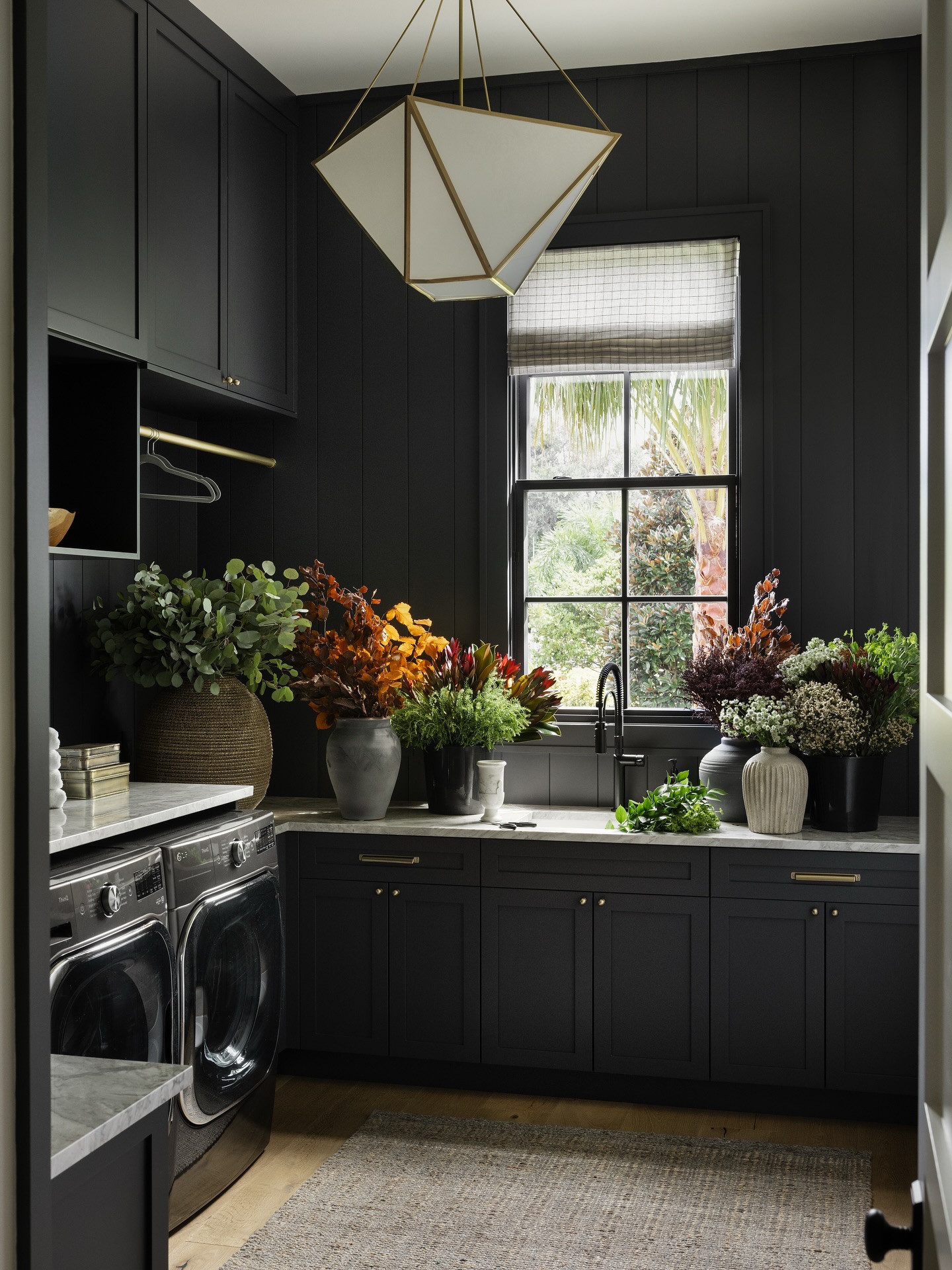
Photo Ashley Martin Home
The laundry room might be one of my favorite places to experiment with a dark color.
In this space, the cabinetry and wall paneling are painted nearly black, creating a cocoon-like feeling. But the room doesn’t feel gloomy because there are so many lighter and warmer elements working against the darkness.
The stone countertop brings in natural variation. Brass hardware adds a little glow. The oversized geometric pendant keeps the ceiling interesting, while all those plants bring an incredible amount of life to the room.
The takeaway: If you’re nervous about painting an entire room black, start with cabinetry or built-ins. It’s a relatively contained way to get the drama without committing to every wall.
And yes, I might actually enjoy doing laundry in a room like this.
2. Let Black Become the Backdrop
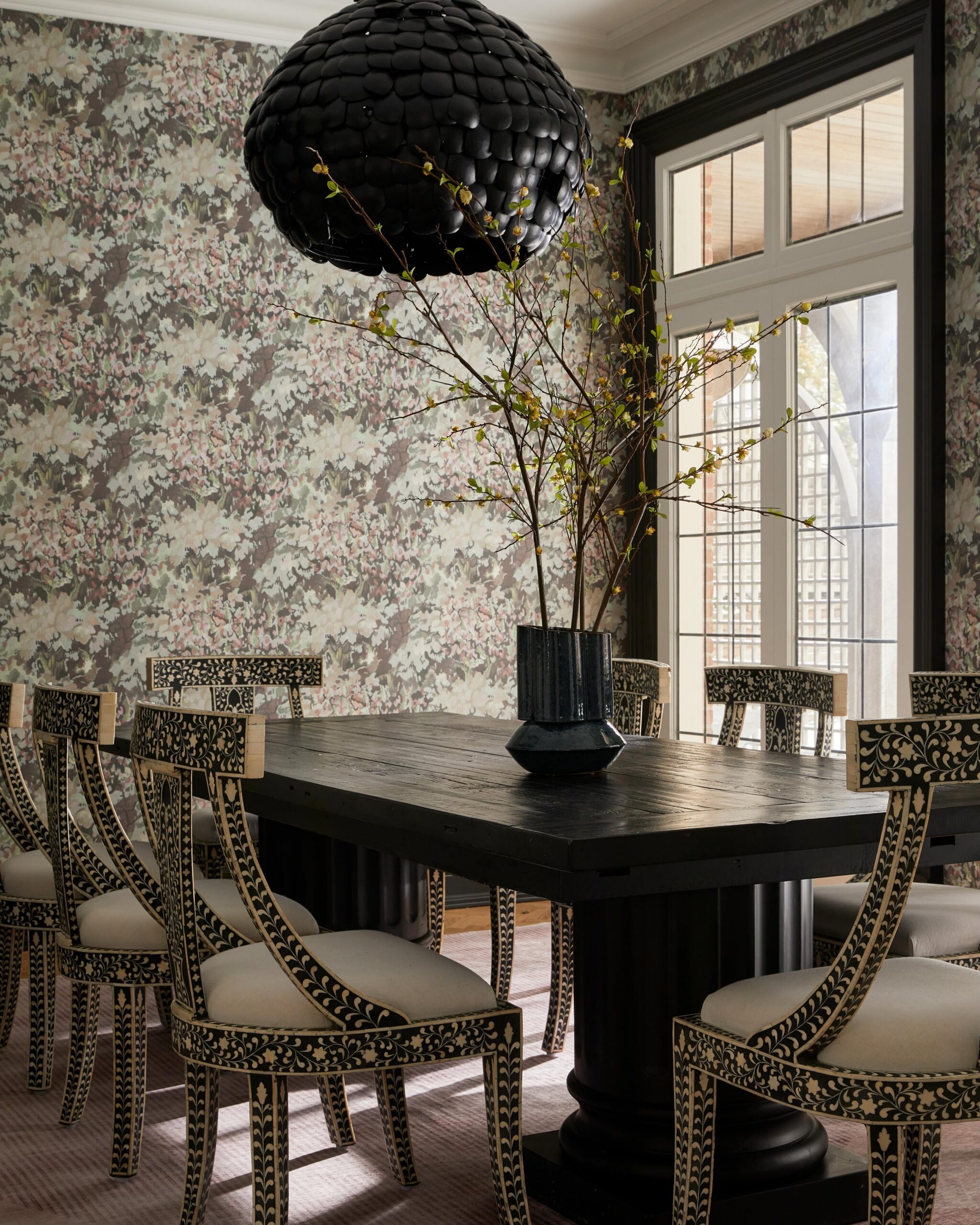
Photo JPZ INTERIORS
This dining room takes a completely different approach.
Instead of solid black walls, a heavily patterned wallpaper creates the backdrop. Black appears throughout the room in the dining table, oversized pendant, door and window trim, and beautifully detailed chairs.
What keeps it from becoming visually overwhelming is the mix of muted colors in the wallpaper and the warm wood tones woven throughout the furniture.
I especially love the idea of using black as the visual anchor rather than the only color in the room.
A black dining table, dark trim, or black lighting fixture can give a room that same moody feeling without requiring you to paint every surface.
3. Black Marble Makes a Bathroom Feel Like a Boutique Hotel
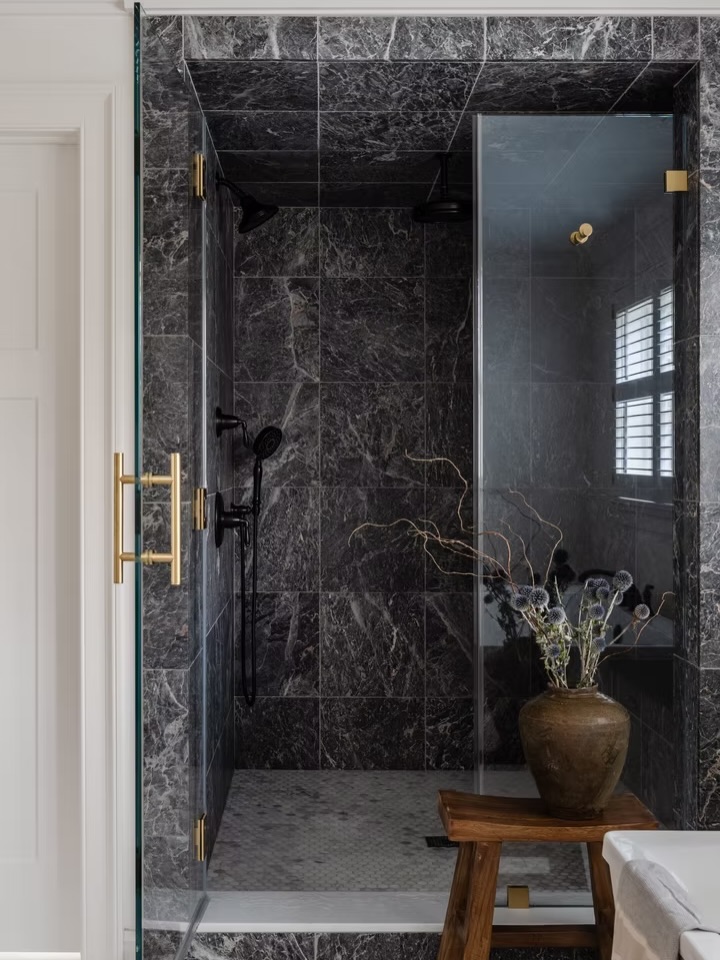
Photo Trish Lynn
If black walls feel like too much of a commitment, the bathroom is another great place to experiment.
Here, dark marble covers the shower walls and ceiling, creating a dramatic, almost jewel-box effect.
The important detail is the veining.
Rather than a flat black surface, the marble has layers of gray and white running through it. That movement gives the darkness dimension.
Brass hardware adds another layer of warmth, while the clear glass shower enclosure prevents the space from feeling closed in.
Design lesson: When using a very dark color extensively, introduce materials with natural variation. Marble, stone, wood, plaster, linen, and textured fabrics all help keep a dark room from looking flat.
4. Go All In With a Black Hallway
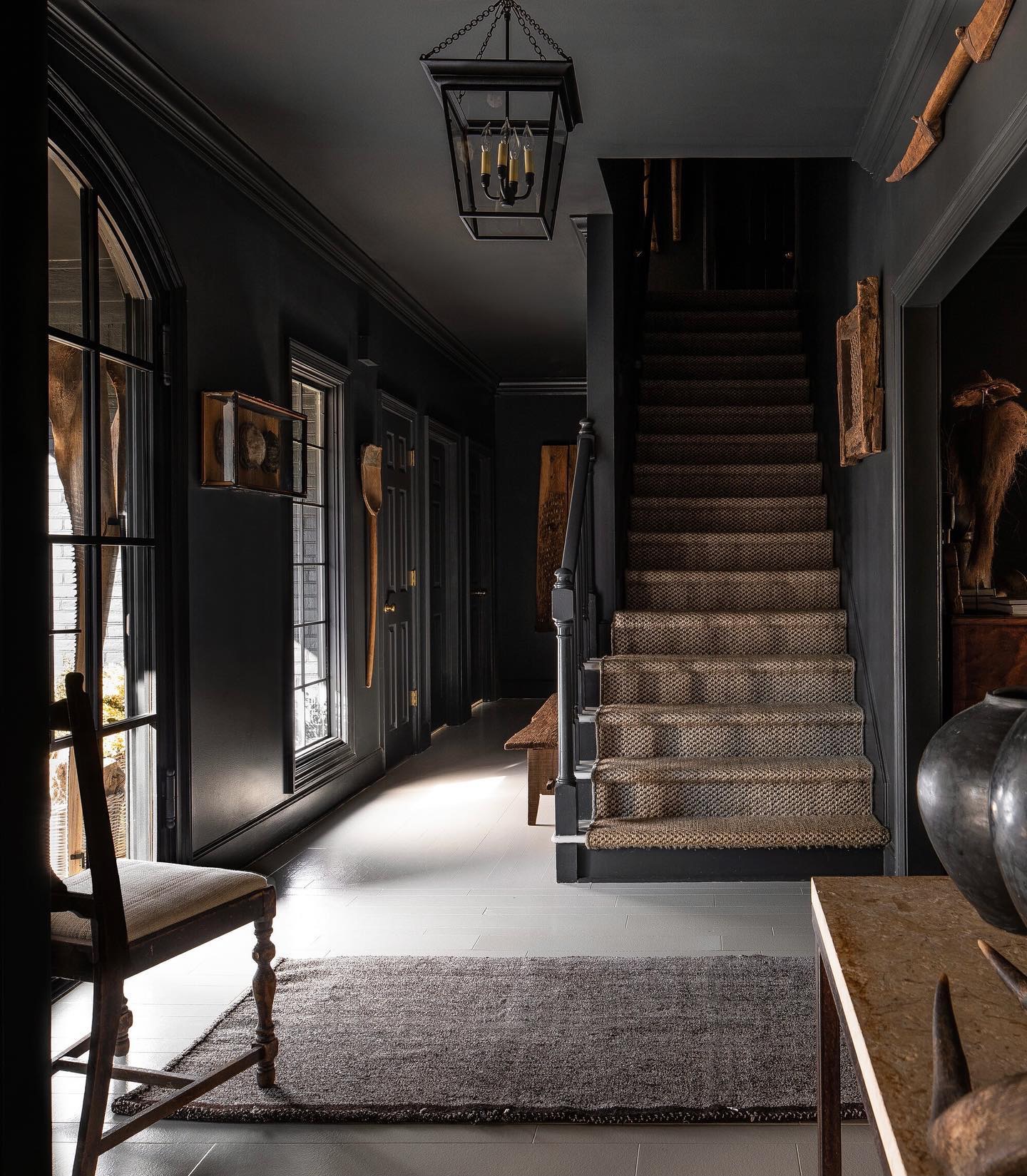
Photo Sean Anderson
Now this is commitment.
The walls, trim, doors, staircase, and ceiling are all wrapped in dark paint, creating a dramatic hallway that feels almost cinematic.
But notice what prevents it from becoming oppressive: light.
The windows on the left bring in natural light, while the lighter flooring creates just enough contrast underneath all that black.
Then there are the warm details: aged wood, woven stair carpeting, brass accents, artwork, and vintage-looking objects.
This is one of my favorite ways to use black in a traditional home. Instead of fighting the architecture, the dark color emphasizes it.
The molding becomes more graphic. The windows feel more sculptural. The staircase becomes a focal point.
5. A Black Living Room Can Still Feel Soft
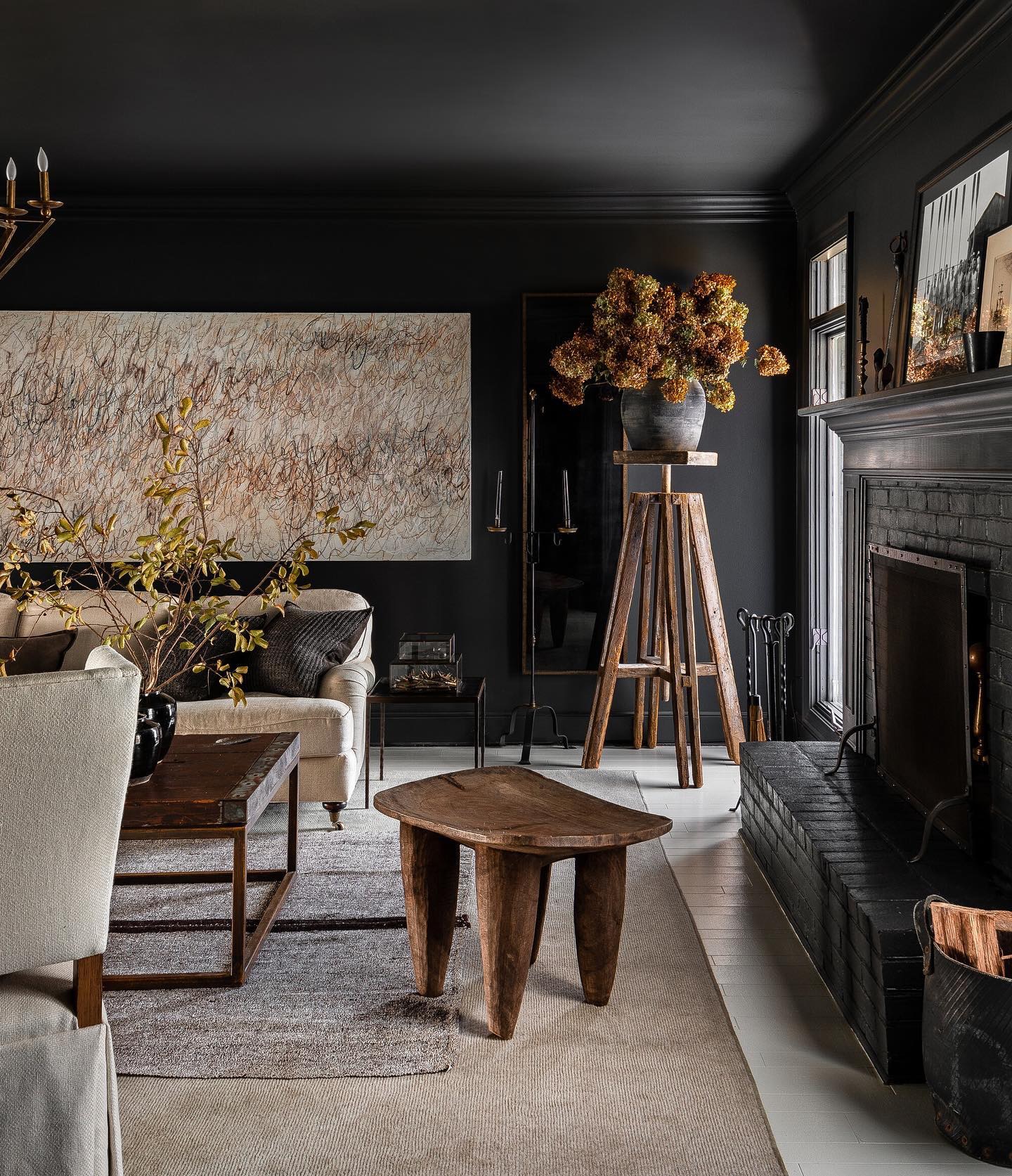
Photo Sean Anderson
This room might be the best argument for black interiors.
The walls, ceiling, fireplace, and trim are all dark, yet the space feels incredibly inviting.
Why?
Because almost everything placed against the black has warmth.
There’s a creamy sofa and armchair. There are natural wood tables. A woven rug adds softness underfoot. The dried branches bring in a warm golden tone. And the fireplace creates a natural focal point.
This is the formula I would steal:
Black + cream + wood + texture + greenery = cozy.
It is simple, timeless, and much more approachable than an entirely monochromatic black room.
The Black Interior Formula
If I were creating a black room from scratch, I would think about it almost like getting dressed.
Start with black as the base.
Then add cream or ivory for contrast.
Bring in warm wood for character.
Add brass or aged metal for a little shine.
Layer in textiles and rugs for softness.
Finally, add something living, whether that’s a giant vase of branches, a potted tree, or a collection of flowers.
The result is a room that feels collected rather than overly coordinated.
And that’s really what I love about these spaces. They’re dramatic, but they’re not trying too hard.
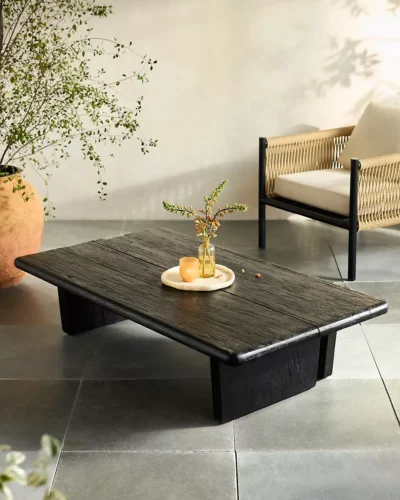
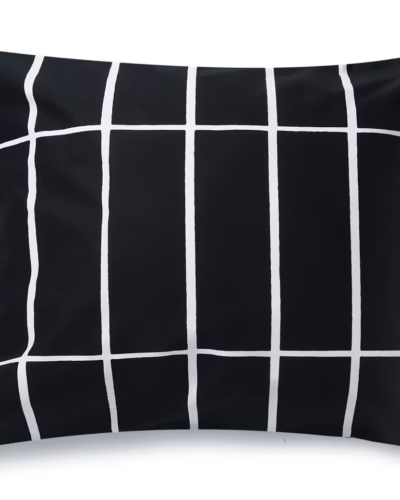
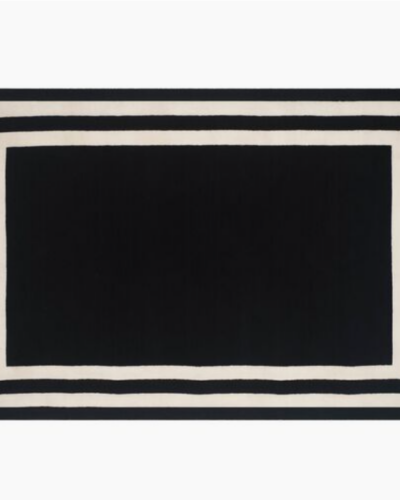
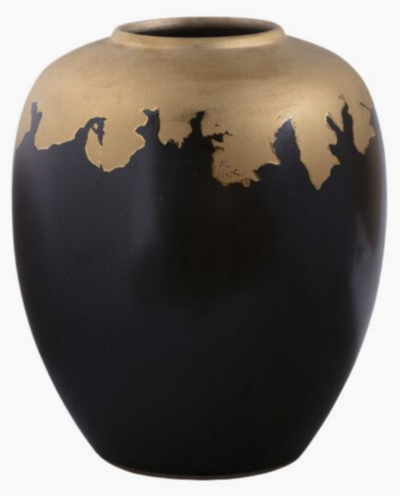
Shop the Black Interior Look
Final Thoughts
Black interiors aren’t necessarily about being dark.
They’re about contrast.
Black makes warm wood warmer. It makes brass glow. It makes greenery look greener. It makes cream upholstery feel softer. And it can turn ordinary architectural details into something dramatic.
The secret is not to treat black as the whole story.
Let it be the backdrop.
Then layer in the things that make a house feel like home.
Would you paint a room in your house black? I think I’m officially convinced.