1. Make the Staircase Part of the Design
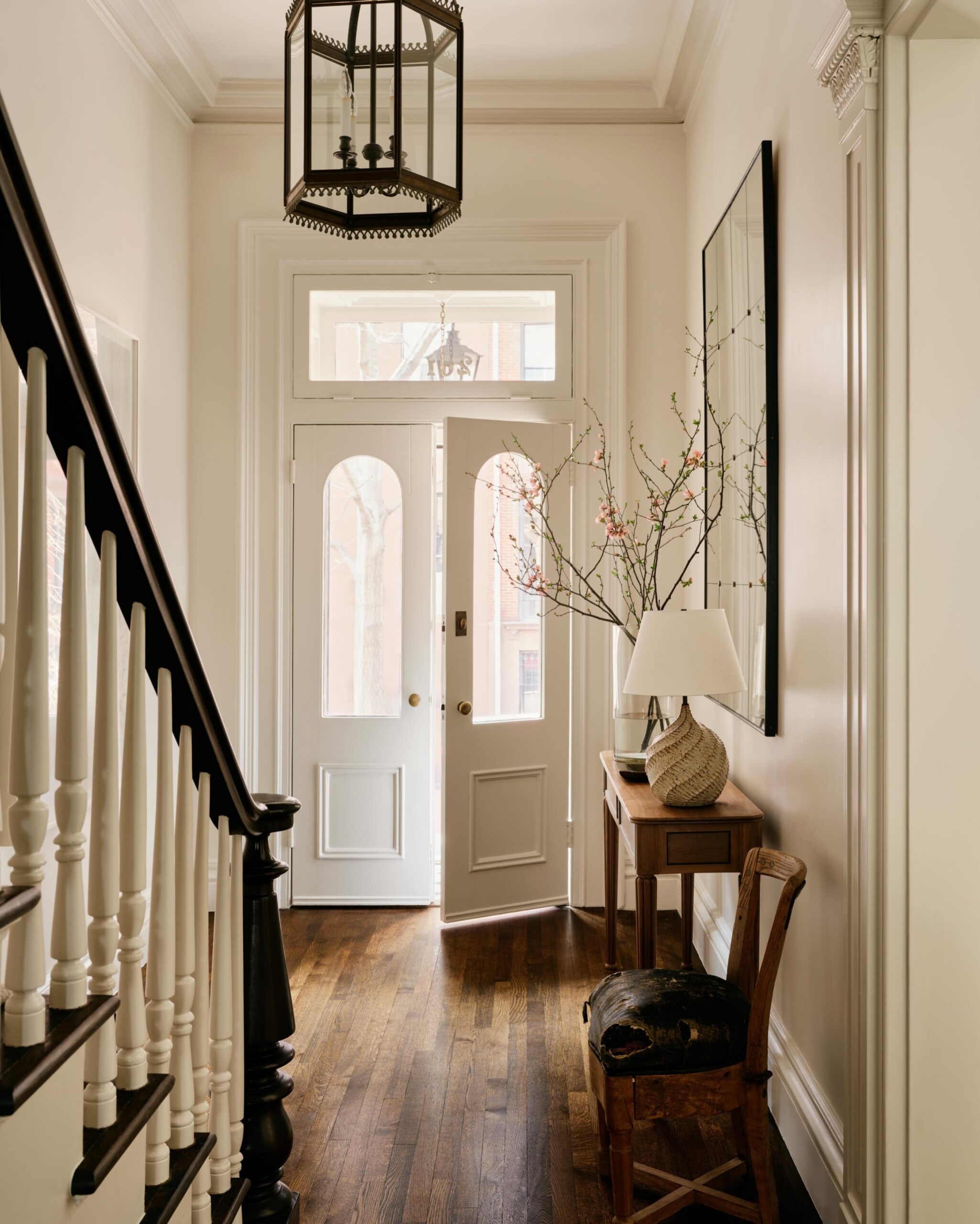
Photo Mark Cunningham
An entryway staircase doesn’t have to fade into the background. In the first space, the classic white spindles are paired with a dramatic black handrail and newel post, creating a strong graphic contrast against the warm wood floors.
The takeaway? Don’t be afraid to highlight architectural details. Painting a railing, door, or trim in a contrasting color can make an ordinary passageway feel much more intentional.
A simple console table along the opposite wall adds function without competing with the staircase. A large mirror, sculptural lamp, and branches bring the look together.
Try this:
- Pair light walls with a dark stair railing
- Add a narrow console to an unused wall
- Use a large mirror to reflect light
- Bring in branches or greenery for softness
2. Treat the Hallway Like a Room
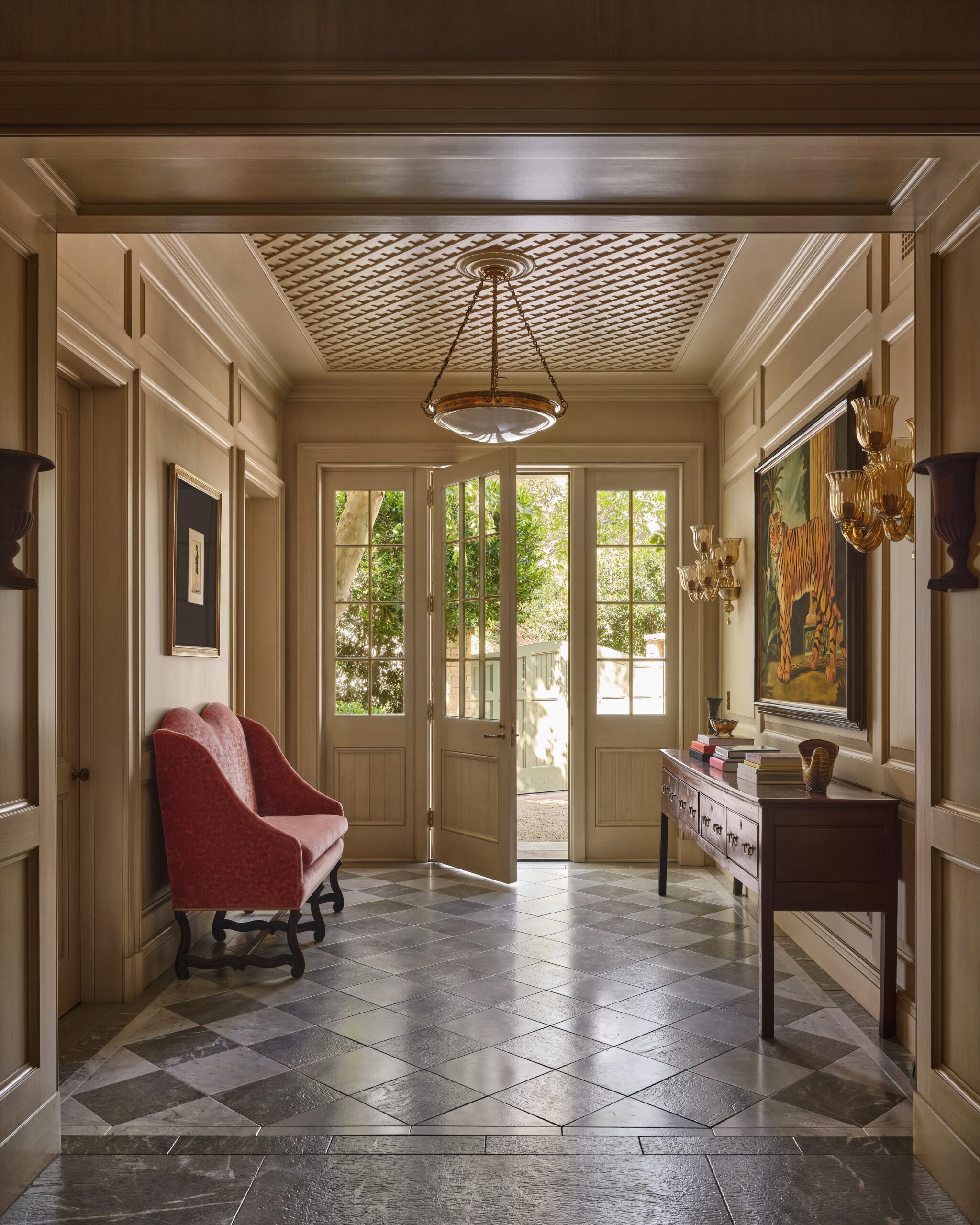
Photo Jake Arnold
A hallway is easy to overlook when decorating, but the second space shows why it deserves the same attention as a living room or dining room.
Here, paneled walls, a decorative ceiling, patterned stone flooring, and a pair of upholstered chairs create a hallway that feels almost like a destination in itself. A long console provides a natural place for books, artwork, and decorative objects.
One of our favorite entryway ideas is to give a transitional space its own personality rather than treating it simply as a way to get from one room to another.
Think beyond the furniture. Ceiling treatments, wall paneling, flooring, and lighting can make just as much impact.
3. Let a Tapestry or Wallpaper Set the Mood
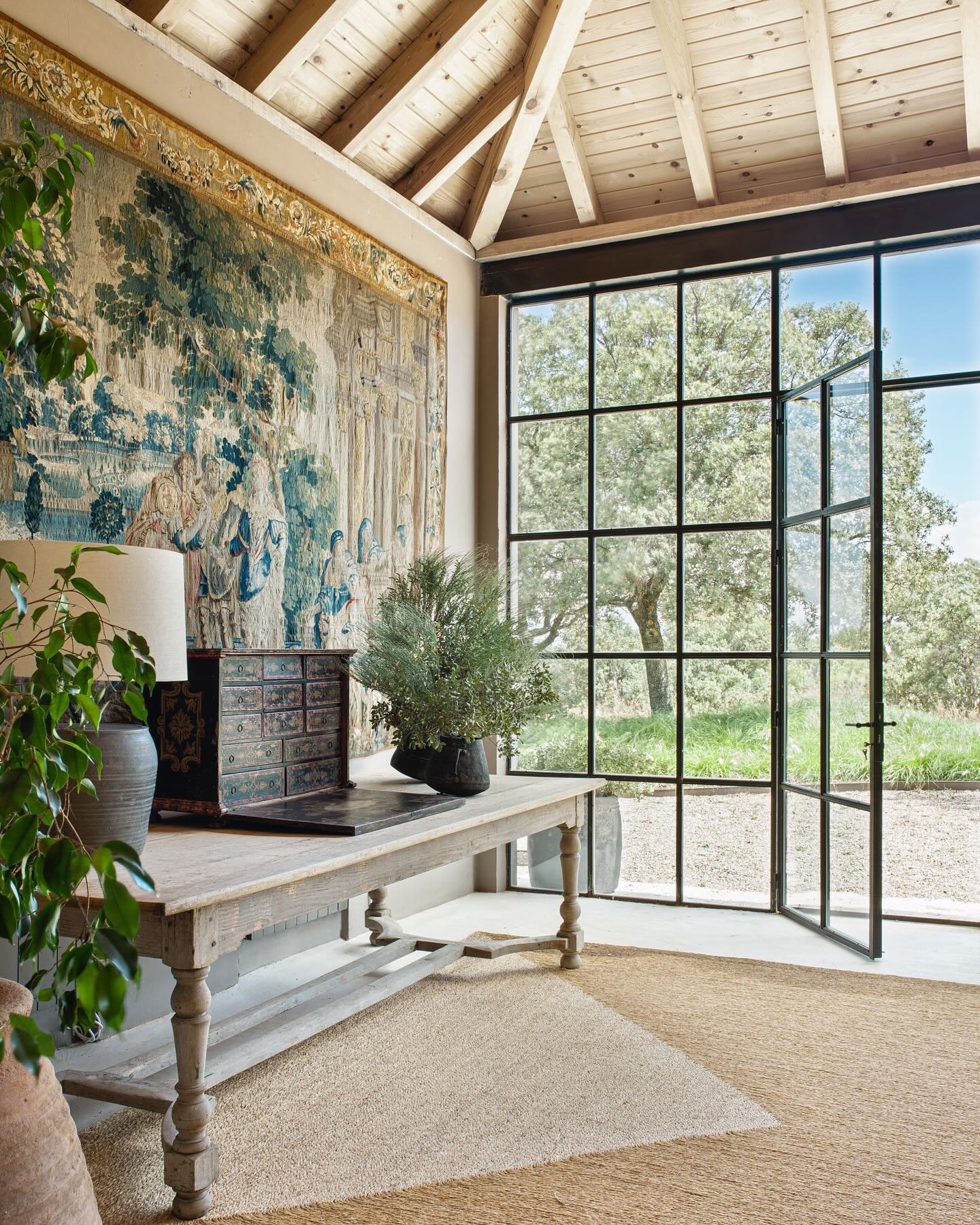
Photo Belen Domecq
The third entryway takes a completely different approach. Instead of relying on architectural millwork, the walls become the focal point with a large-scale tapestry.
The combination of the woven artwork, rustic wood ceiling, oversized windows, and antique-style console creates a relaxed, collected feeling. It’s proof that an entryway can feel sophisticated without being formal.
If your space has plain walls, consider using:
- A large tapestry
- Vintage-inspired wallpaper
- Oversized artwork
- A gallery wall
- A decorative wall mural
The key is to choose one strong visual moment and let the rest of the space support it.
4. Use a Dark Door for Instant Contrast
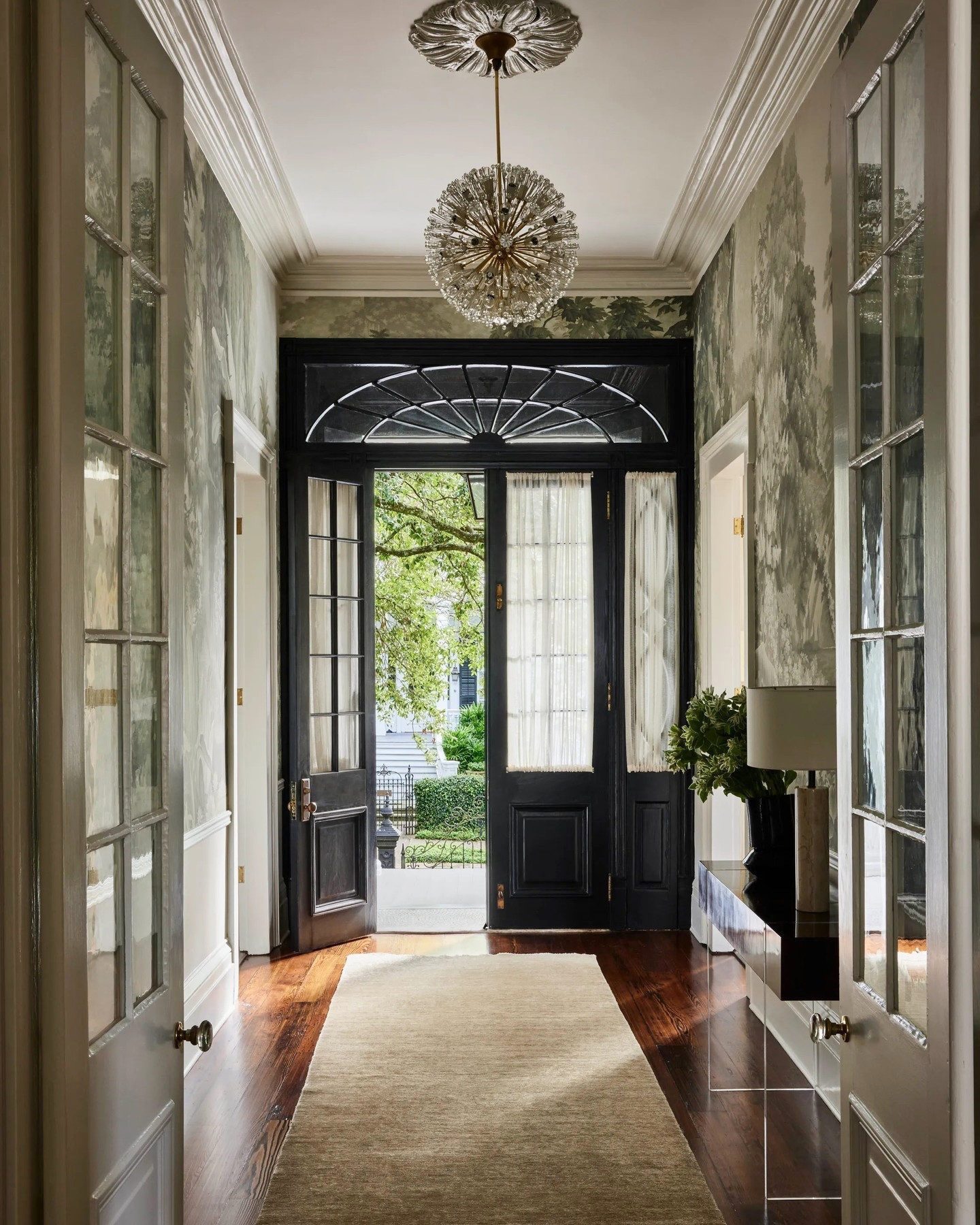
Photo Morris Adjmi Architects
There’s something timeless about a black front door. In the fourth hallway, the dark door creates a dramatic focal point against the lighter walls and warm hardwood floors.
Glass-paneled interior doors, botanical wallpaper, and a statement chandelier keep the space from feeling too stark. The result is traditional but not overly formal.
If you’re looking for an easy way to give your entryway more impact, consider painting the front door or interior doors a deep charcoal, black, or espresso brown.
It can be one of the simplest entryway ideas to recreate and one of the most effective.
5. Mix Warm Wood With Black Details
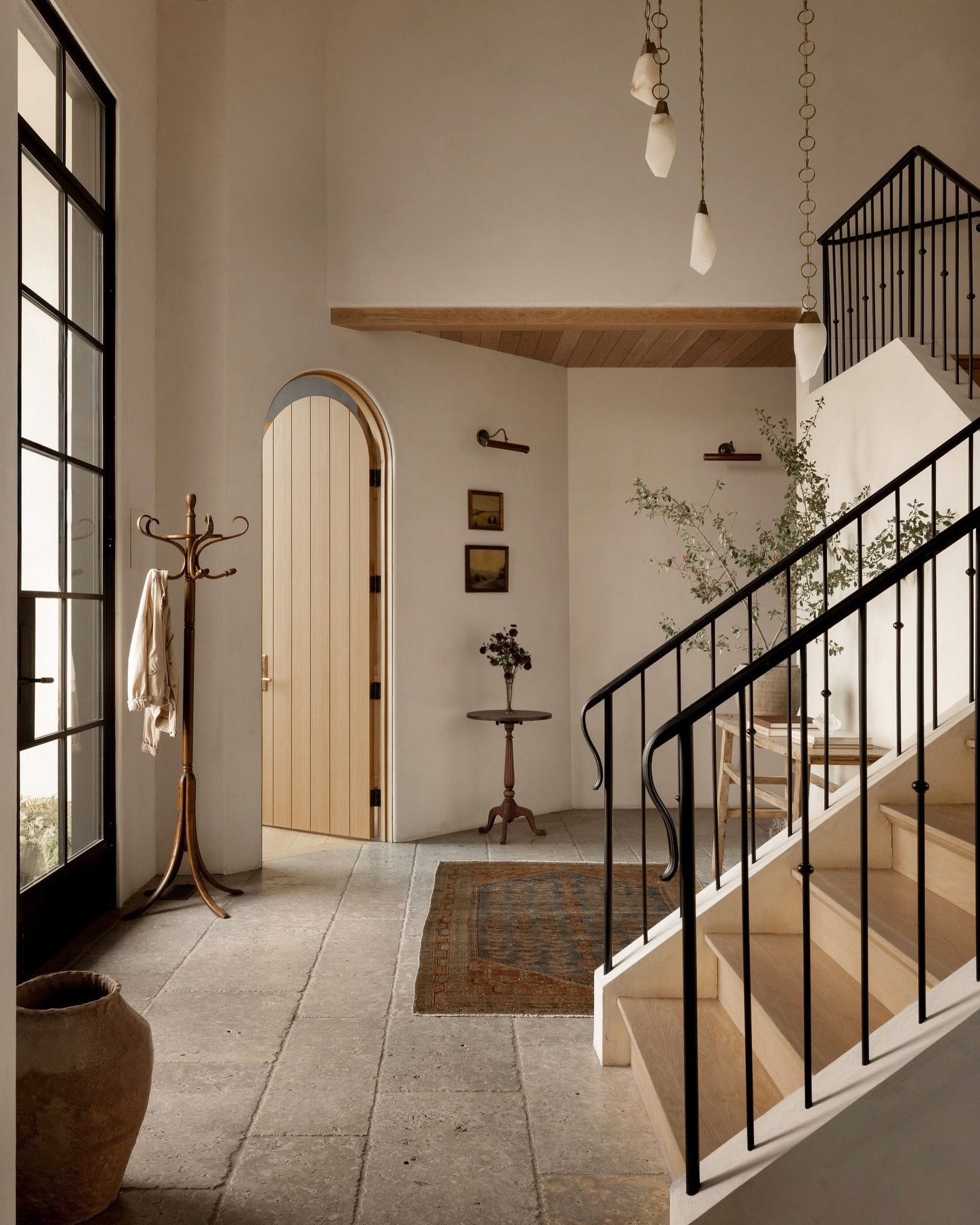
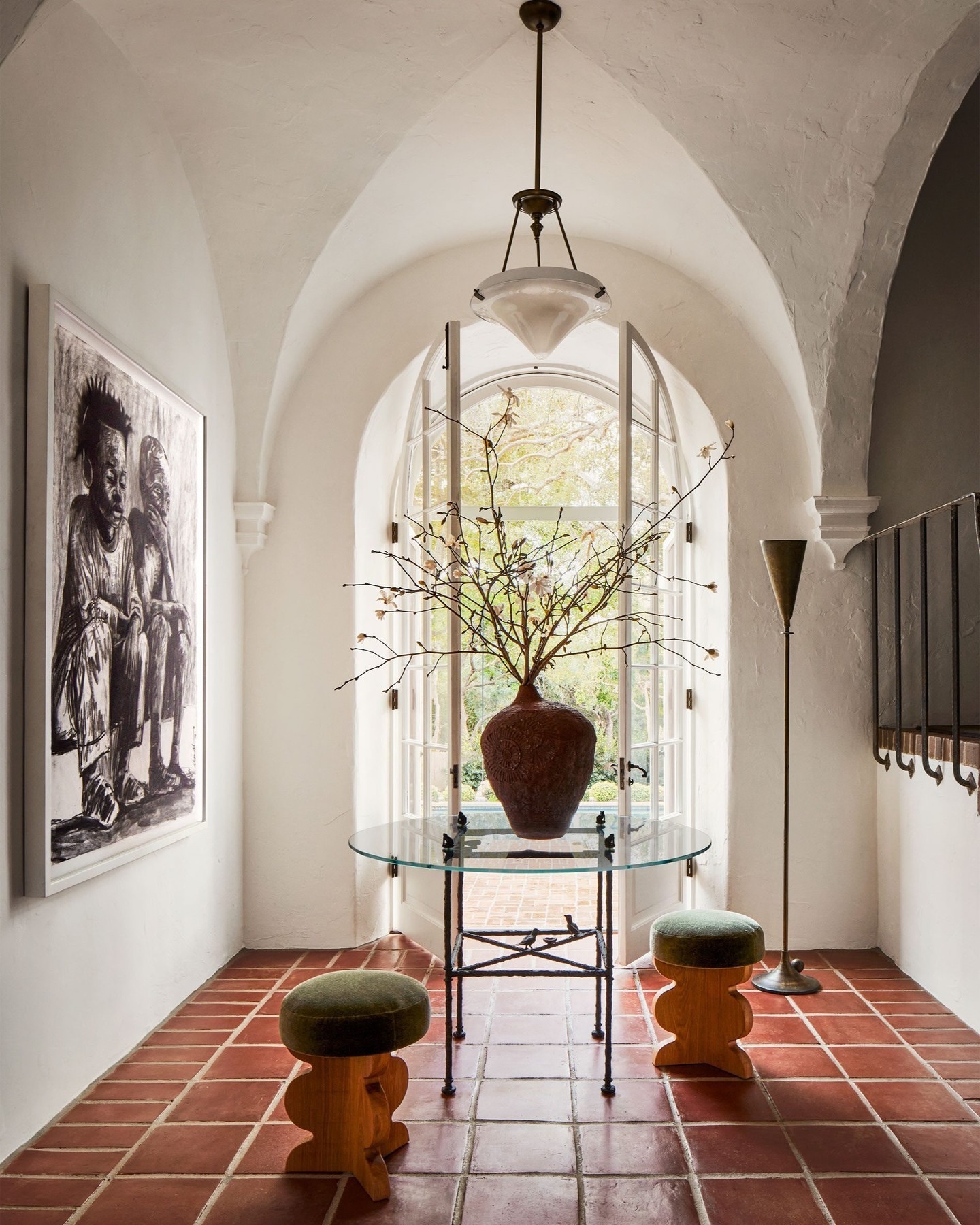
The final space feels quieter and more relaxed, but it still has plenty of personality. A black-framed window and staircase railing add definition to the warm neutral palette, while the wood ceiling and natural stone flooring keep everything feeling organic.
This is a great approach if you love a warm minimalist entryway but don’t want the space to feel cold.
The formula is simple:
Warm wood + natural stone + soft neutrals + black accents + aged pieces
A vintage-style rug, wooden stool, ceramic vessel, or antique coat rack can add just enough imperfection to make a newly decorated space feel lived-in.
How to Make Your Entryway Feel More Expensive
You don’t necessarily need expensive furniture to create a beautiful entrance. Instead, focus on the elements that make the biggest visual impact.
Start with the lighting
A beautiful pendant or chandelier can instantly elevate a hallway. Look for something sculptural or architectural rather than relying on a standard flush mount.
Add a mirror
A mirror isn’t just decorative. It can bounce light around a narrow entryway and make the space feel larger.
Bring in one antique piece
A vintage console, chair, stool, or small table can give a newer home more character. Don’t worry about everything matching perfectly.
Layer the textures
Wood, stone, woven rugs, ceramics, glass, and linen all work beautifully together in an entryway. Mixing materials keeps neutral spaces from feeling flat.
Don’t forget the ceiling
The ceiling is an often-overlooked opportunity. Wood beams, decorative molding, wallpaper, or a statement light fixture can completely change the feeling of a hallway.
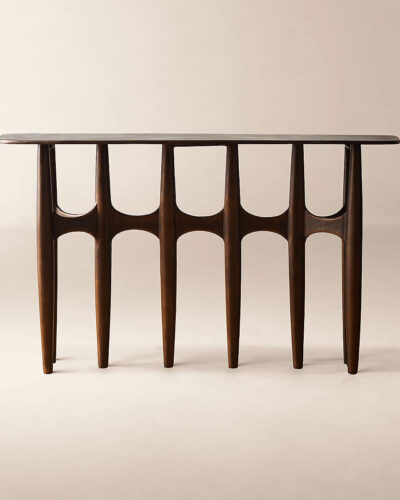
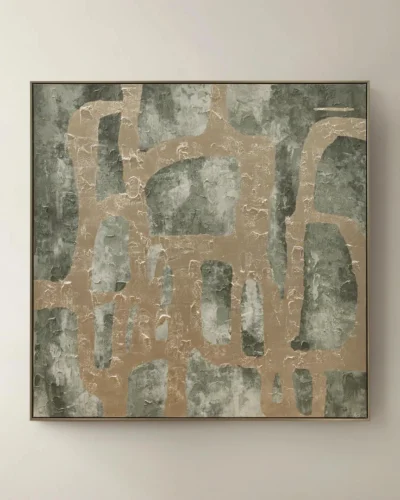
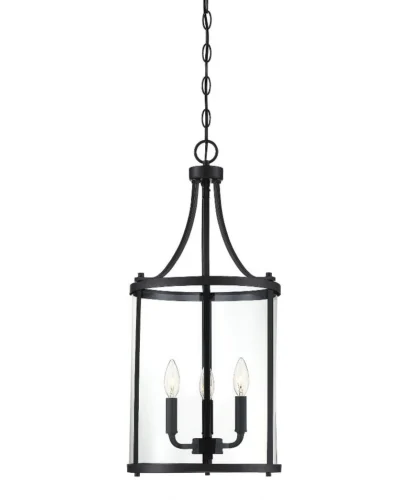
Shop the Look
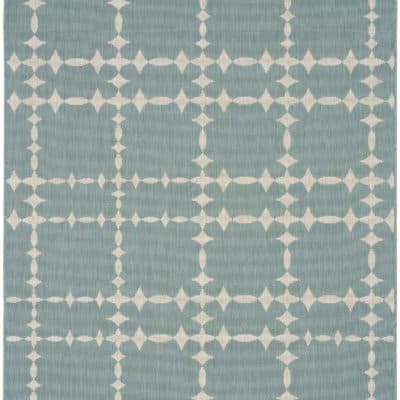
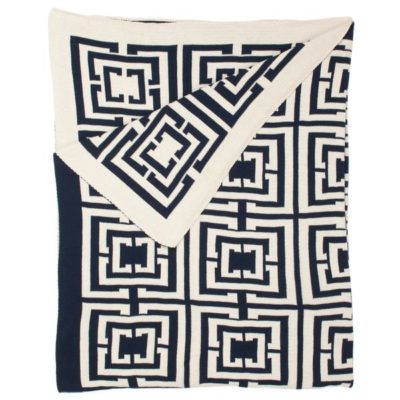
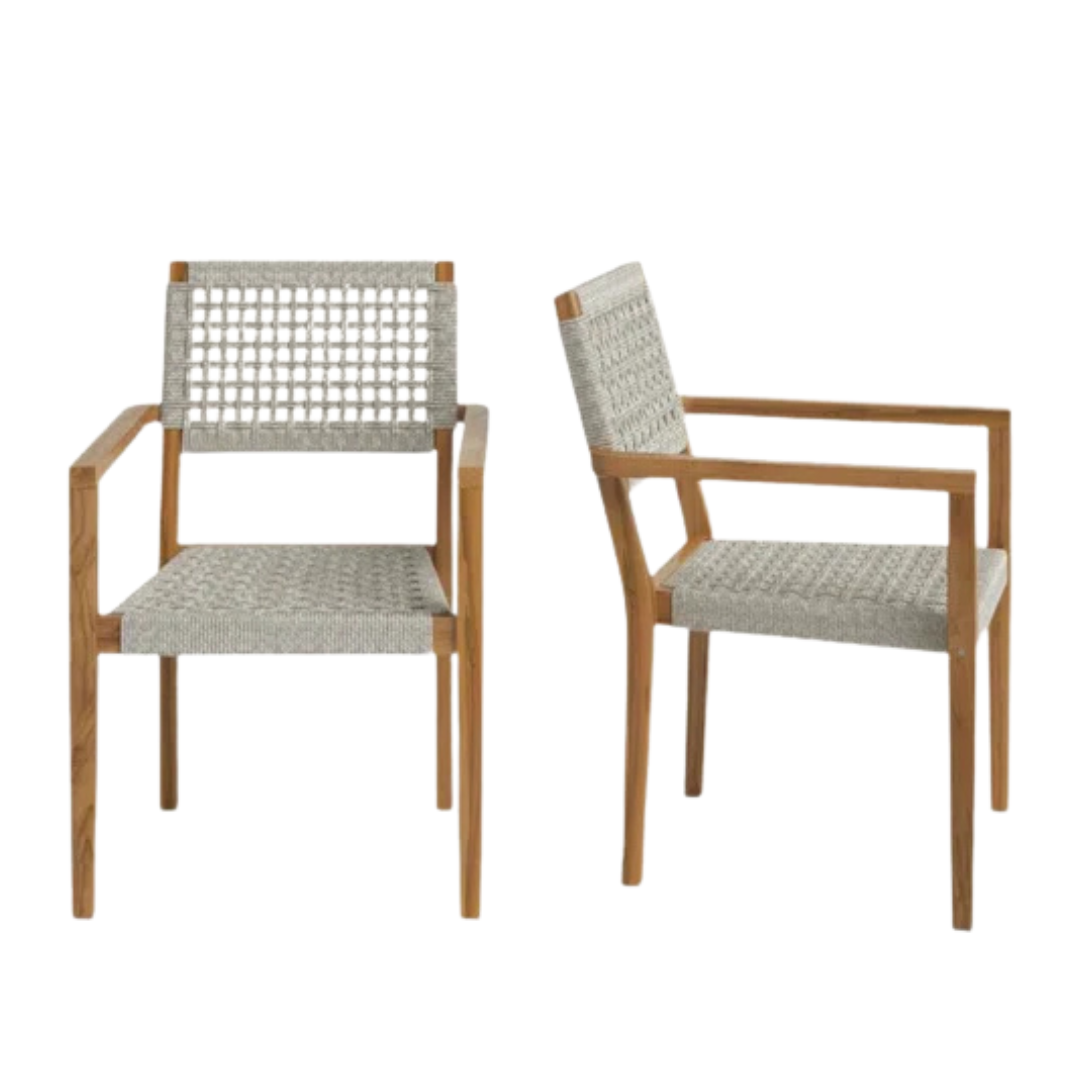
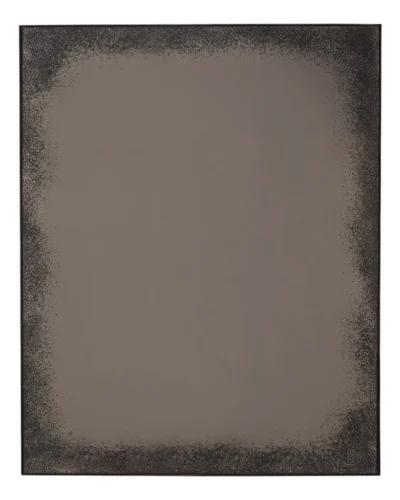
We’ve rounded up a few pieces to elevate your entryway and give it that warm, collected feel.
The Entryway Sets the Tone
The best entryways don’t feel overly styled. They feel like a natural extension of the home.
Whether your style leans classic and collected, rustic and relaxed, or warm and modern, the same principle applies: use the architecture as your starting point, then layer in pieces that add warmth and personality.
A beautiful entryway isn’t just about making a good first impression. It’s about making coming home feel a little more special.
xoxo, Coco 💛